

Paris Airport Guide for First-Time Visitors: My First Arrival in Paris, What I Learned, and What I’d Do Differently
I always thought arriving in Paris would feel cinematic.
You know, one of those moments where you land, fix your hair, walk out of the airport looking mysterious and emotionally healed, and somehow the whole city just opens up for you like a film.
It did not happen like that.
What actually happened was this: I landed in Paris exhausted, slightly dehydrated, wearing the wrong outfit, dragging a suitcase that suddenly felt twice as heavy, and trying very hard to look like I knew what I was doing.
I did not.
And I think that’s why I wanted to write this, because no one really tells you that your first Paris memory might not be a terrace in Saint-Germain or a perfect pain au chocolat or a handsome stranger smoking outside a little cafe.
Sometimes your first Paris memory is just... the airport.And honestly? That matters too.
Because if you’re flying into Paris for the first time, the airport is your first impression of the city. It’s the first moment where you realize this whole dream is now real. You’ve arrived. You’re here. You’re tired and disoriented and maybe a little emotional, and now you have to figure out passport control, baggage claim, trains, taxis, phone data, and whether you’re about to spend way too much money on the wrong thing just because your battery is dying and your brain stopped working three hours ago.
So this is my very real guide to arriving in Paris for the first time. Not the cold, robotic version. The real one. The one I wish I had when I landed.
The one that says: here’s how it works, here’s what to do, here’s what not to do, and here’s how to leave the airport without losing your mind.

The first thing that confused me: there isn’t just one “Paris airport”
Before I moved here, I used to think “Paris airport” was one place. It is not one place.
If you’re flying into Paris, you’re probably arriving at either Charles de Gaulle or Orly, and they feel very different.
Charles de Gaulle, or CDG, is the big one. The international one. The one that feels a little like its own city. If you’re coming from the U.S. or another long-haul destination, there’s a good chance you’ll land there. My honest opinion? CDG is doable, but for a first arrival, it can feel overwhelming. There are signs everywhere, people moving in every direction, long walks, terminal numbers, train connections, and just enough chaos to make you question even very simple decisions.
Orly, on the other hand, feels softer. Still busy, still an airport, still not exactly a spa experience, but somehow more manageable. Closer to Paris. Easier to breathe in. Less intimidating.
I think this is important because the first thing you should do when you land is confirm which airport you’re actually in, because how you leave the airport depends on that. And yes, this sounds obvious, but travel fatigue makes fools of all of us.
My first lesson: do not land in Paris without a plan for your phone
I cannot say this enough.
Do not arrive in Paris assuming you’ll figure out your phone situation later.
Before you travel, check if your regular mobile plan already includes roaming in France or the EU. Sometimes it does, and if the rates are decent and the data allowance is enough, that may be all you need for your first few days. But don’t just assume. Look at the details. Some plans sound generous until you realize there’s a cap, reduced speed, or extra charges once you use a certain amount.
If your regular line isn’t a good option, then honestly, the best thing to do is set up an eSIM before you fly.
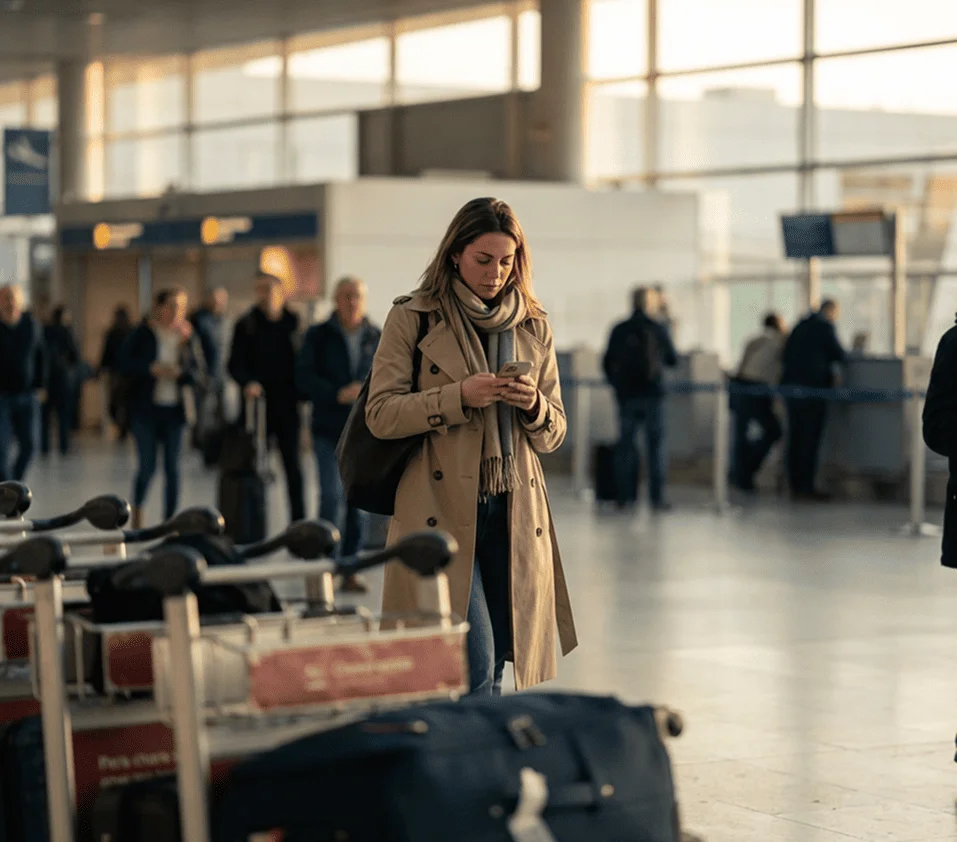
This is one of those very unglamorous travel decisions that makes your life instantly better. If you land with working data, everything changes. You can open maps, message your host, check where to buy the train ticket, order an Uber, see where the official taxi line is, and generally feel like a stable and capable person.
And when I say eSIM, I mean services like Holafly, Airalo, or Nomad. Those kinds of providers are usually much better to sort out before the trip than trying to buy a SIM at the airport while jet-lagged and dragging a suitcase through arrivals like a woman in the final chapter of a breakup novel.
If your phone doesn’t support eSIM, then yes, you can buy a physical SIM later, either at the airport or in the city. But for me, that’s a backup plan, not the ideal one. Airport purchases always happen when you’re most vulnerable: tired, rushed, and not in the mood to compare prices or ask what documents you need.
So my real advice is this: first check your current roaming, then compare eSIM options before the trip, and only think about a physical SIM if those don’t work for you.

Getting off the plane: what actually happens when you land
The first hour after landing in Paris is not hard exactly, but it does require your attention.
If you’re arriving from outside the Schengen area, you’ll go through passport control first. Sometimes it moves quickly, sometimes it feels like time has become meaningless. After that comes baggage claim, then customs, and then finally arrivals, where suddenly everything gets louder and more real.
This is usually the moment when I see people start to unravel a little.
Some are standing there opening and closing apps, some are trying to connect to Wi-Fi, some are dragging three suitcases with the haunted expression of people who booked charming accommodation in a fifth-floor walk-up.
And I get it. That moment is weird. Because technically you’ve arrived in Paris, but you’re not in Paris yet. You’re still in the airport. You still have one last challenge: leaving.
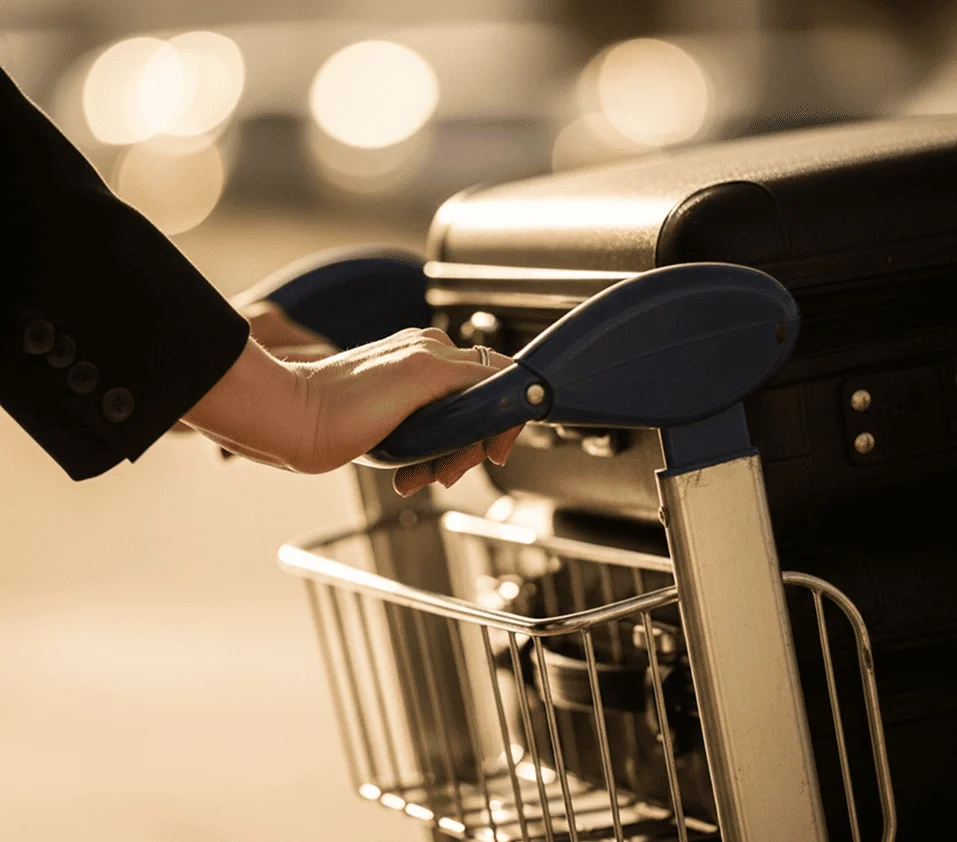
Something I wish more people knew: you do not have to suffer with your luggage
Use a luggage cart.
Really.
This is not the moment to prove you are strong and elegant and capable of carrying everything yourself. If your bags are heavy, get a cart and keep moving with dignity. Also, if you end up needing to move between terminals or correct a mistake, that’s not the end of the world either. Airports are designed for movement, even if it doesn’t always feel graceful
while you’re doing it.
One of the first myths I had before moving here was that everything in Europe is somehow more intuitive and chic. It isn’t. Airports are airports. If you have too much luggage, you will feel it. So be practical.
The question everyone asks: train, taxi, or Uber?
This is where Paris starts testing your personality.
If you land at Charles de Gaulle, the most obvious budget-friendly option is usually the train into the city. If you’re traveling light, staying somewhere with a fairly easy connection, and feeling mentally stable, that can be a good choice. It’s usually the best option if you want to save money and you don’t mind navigating a little.
But this is my honest take: after a long flight, especially your first time in Paris, there is absolutely nothing wrong with taking a taxi. I know some people treat airport taxis like a personal failure, as if the noble traveler must
drag herself onto public transport immediately in order to deserve the city. I disagree. If you are exhausted, overwhelmed, carrying too much, arriving late, or just want one thing to be simple, take the taxi.
And if you do, make sure it is the official taxi line outside the terminal. Not a random driver approaching you inside arrivals. Not a man asking if you need a ride. Not anyone trying to make the process feel easier. The right move is always the designated official taxi rank.
At Orly, the decision feels a little easier because the connection into Paris is more straightforward now. Public transport from there is much more approachable than I expected, and for some arrivals it’s actually the ideal balance between practical and affordable. But again, if you’re tired or your accommodation is awkward to reach, taxi is still perfectly reasonable.
And then there’s Uber.Yes, you can use Uber in Paris, and if that feels familiar to you, it can be comforting. But I’ll be honest: after a long flight, I sometimes think the official taxi line is simpler. Uber works best when your phone is functioning, your data is working, your pickup point is clear, and you still have the emotional energy to open one more app. Taxi is often simpler in that first fragile airport moment.
Buying train tickets: the part that sounds simple until you’re actually there
I think this is one of those things that becomes more intimidating only when you’re tired.
In theory, buying the ticket is easy. In reality, if you’ve just landed, everything suddenly feels more complicated than it should. There are machines, people waiting, signs, unfamiliar names, and that quiet panic of wanting to choose the right option quickly.
So this is the important thing: if you’re taking the airport train or metro connection into Paris, make sure you’re buying the correct airport fare, not just assuming any basic metro ticket will work.
That’s the kind of mistake that sounds impossible when you’re reading about it from home, and extremely possible when you’re sleep-deprived in real life.
So take one extra minute. Read the screen. Ask if needed. Better one slow minute than a weird, stressful start.
Money, cards, and little payment things no one explains properly
One thing that helped me quickly was realizing that I did not need to panic about cash.
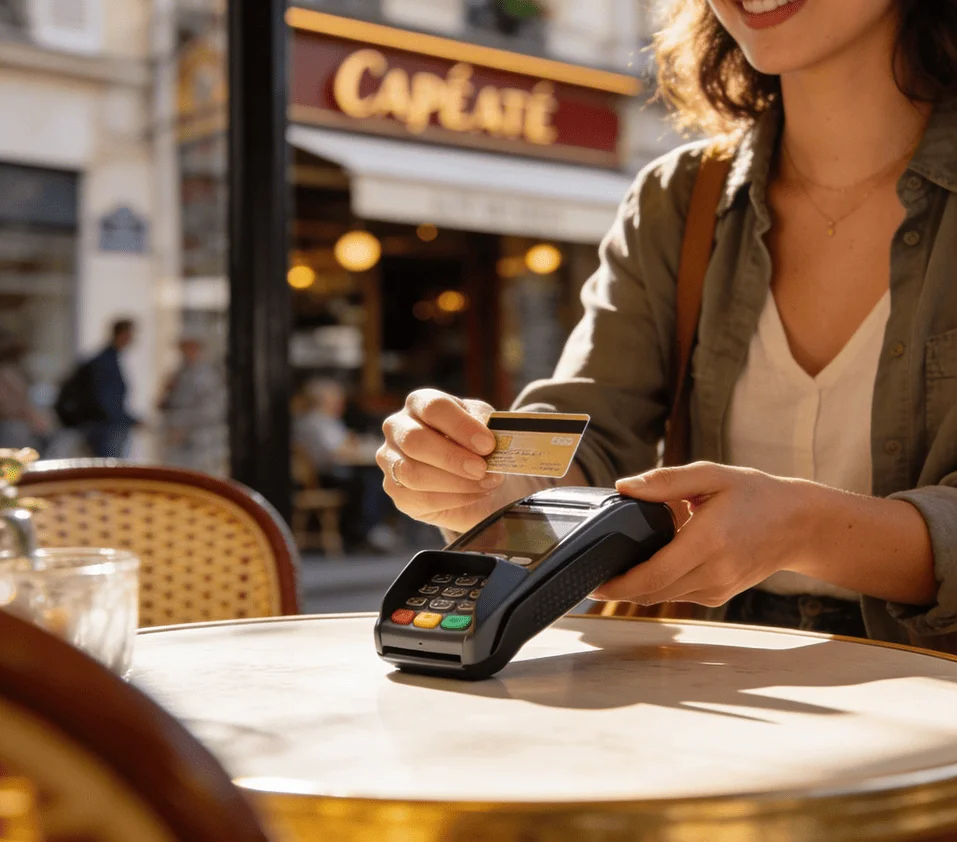
For most airport-related things, having a good bank card is honestly more useful than carrying lots of euros. Card payments are usually the easiest option for transport, taxis, and anything you might need in or around the airport. Contactless is your friend. Your card should work internationally. That matters much more than showing up with a thick wad of cash like it’s 2004.
That said, I still think having a little backup money is fine. Not because you’ll need it for everything, but because there is something emotionally reassuring about knowing you have options.
What I would never do again after landing in Paris
I would never land without checking my phone plan first.
I would never assume I could just see what happens and sort out transport on the spot with no screenshots, no address saved, and no idea how I’m getting into the city.I would never follow someone offering a ride inside arrivals.
And I would never underestimate how big and tiring an airport can feel when you’re emotional, underfed, and wearing the wrong shoes.
That last part is not a joke.
Arriving in a city for the first time is romantic in theory, but in practice it’s physical. You are carrying things. You are waiting in lines. You are making choices. You are trying not to spend money stupidly. You are just a person trying to arrive.
And there is something very comforting in accepting that.
If I were landing in Paris for the first time all over again
This is what I would do.
Before the trip, I would check my roaming and compare eSIM options. I would save my address, screenshot the route, and pack less than I think I need.
Once I landed, I would move slowly and not pretend I’m in a race. Passport control, baggage claim, bathroom, water, route. In that order.
If I landed at CDG and felt good, I’d take the train only if my connection into the city looked easy. If not, I’d go straight to the official taxi line and call it self-respect.
If I landed at Orly and the public transport route made sense, I’d probably take it. If I was too tired to think clearly, I’d take the taxi and start Paris in a better mood.
And that’s really what this comes down to.
Not doing Paris perfectly. Just beginning it well.


The truth about arriving in Paris
My first arrival in Paris was not glamorous.
It was fluorescent lights, passport queues, luggage wheels, uncertainty, and trying to act like I was less lost than I was.
But still, when I think about it now, I feel strangely tender toward that version of me.
Because she had no idea what she was doing, and she came anyway.
And maybe that’s part of falling in love with Paris too. Not just the beautiful parts. Not just the rooftops and cafes and perfect little mornings. But also the practical beginning. The airport. The mess. The first choices. The moment when the city is still just beyond you, waiting.
So if you’re coming to Paris soon, here is my advice:Be prepared, but don’t be scared. Check your phone. Know your route. Take the official taxi if you need to. Buy the right ticket if you’re taking the train. Don’t let exhaustion make your decisions for you.
And most of all, remember this:
Your first hour in Paris does not have to be magical. It just has to get you into the city.
The magic can come after.
FAQs
For most people, Orly feels easier. It is smaller, closer, and a little less intimidating than Charles de Gaulle. CDG is completely manageable, but it can feel more overwhelming if it is your first time landing in Paris.
Not unless you really need to. First check whether your normal mobile plan includes roaming in France or the EU. If it does not, I would usually recommend setting up an eSIM before the trip instead. Providers like Holafly, Airalo, or Nomad are often easier than trying to choose a SIM while jet-lagged at the airport.
If you are traveling light and your connection is simple, the train is usually the most budget-friendly choice. But if you are exhausted, arriving late, carrying a lot, or simply want your first hour in Paris to be easier, a taxi is a completely sensible decision.
Always use the official taxi rank outside the terminal. Do not follow random drivers who approach you inside arrivals, even if they make it sound easier or faster.
Yes, Uber works in Paris and can be useful if you already have data and feel comfortable with app-based pickup. Still, after a long flight, I often think the official taxi line is simpler because it removes one more decision.
Usually not very much. A bank card that works internationally is often more useful for trains, taxis, and airport purchases. I still like having a little backup cash, but I would not rely on cash as my main plan.
Trying to improvise everything while tired. Save your address, check your phone setup, know whether you want train or taxi, and take one extra minute before buying tickets. That little bit of preparation changes everything.